
Commercial Roofing SEO: Targeting B2B Property Owners
Commercial roofing SEO works differently than residential. Property managers search on different terms, with different timelines. Here is what moves the needle.
Commercial roofing SEO is not the same exercise as residential roofing SEO - and the guides that treat them as interchangeable are costing commercial contractors real opportunities. The buyer is different, the search terms are different, and the decision timeline is measured in weeks rather than hours. These six commercial roofing SEO tips are specifically for B2B roofing contractors targeting property managers, facility directors, and commercial property owners who search on Google before they call anyone.
1. Separate your commercial and residential presences
The first structural decision is whether your commercial roofing work has its own page or gets bundled into a general "roofing services" landing page. Most roofing websites lump everything together.
The problem: a property manager searching "commercial roofing contractor [city]" is not the same person as a homeowner searching "roof repair near me." Google reads intent signals in the search query and matches them against the content on your pages. If your homepage is optimized for residential keywords with a paragraph about commercial services tacked on at the bottom, your commercial search visibility suffers for it.
What works: a dedicated service page for commercial roofing with its own title tag, H1, and content that addresses the specific concerns of commercial clients - TPO, EPDM, and flat roof systems; scheduled maintenance programs; multi-unit property experience; emergency response capability. That page should link internally to your Google Business Profile and service pages, and vice versa.
Industry data shows the top 3 local results capture 70-80% of clicks on local service searches. For commercial roofing contractors, the stakes per click are considerably higher - a single commercial re-roof can run six figures. Being at position 4 means competing for the remaining 20-30% of searchers on the most valuable jobs in your market.
2. Your Google Business Profile still matters for B2B work
Property managers use Google. That probably sounds obvious, but a lot of commercial roofing contractors have decided that commercial clients work entirely through referrals and existing relationships and that their GBP is only for residential walk-ins. (Property managers do Google their vendors before signing contracts. We know that sounds exactly like something an SEO agency would say to justify their own existence. It also happens to be documented behavior in how commercial buyers research service providers.)
The GBP category setting matters specifically here. "Commercial Roofing Contractor" as your primary category outranks "Roofing Contractor" for commercial searches - the same way "Air Conditioning Repair Service" outranks "HVAC Contractor" for AC repair searches. Specificity tells Google exactly who to show your listing to.
Service area is the most common mistake we see. A landscaping business in Irvine had set its service area to cover all of Southern California - Los Angeles, San Diego, Riverside, and surrounding counties. The result was near-zero Local Pack visibility for any specific city. After tightening to the actual coverage zone (Irvine, Newport Beach, Costa Mesa, and four adjacent cities), Local Pack appearances for primary keywords came within 6 weeks.
Commercial roofers make the same error. If your service area claims "all of California," you are competing against every commercial roofer in the state while diluting your relevance signal for every individual market. Set it to the cities you actually serve commercial clients in, and be accurate about it.
Not ranking where you should be?
We audit local map pack rankings, GBP completeness, and competitor gaps for home service contractors. Free report, no sales call.
Get your free audit →3. Review velocity matters more than your review count

Commercial roofing contractors tend to accumulate reviews in bursts - a productive run of jobs generates some activity, then the crew is busy for six months and nothing new comes in. The result is a profile with a respectable total count and a review history that ends eight months ago.
Google is not asking whether this business has reviews. It is asking whether this business is currently serving customers. A business with 40 reviews and 4 new ones this month will outrank a competitor with 300 reviews and none in six months - consistently, across home services verticals.
We have seen this directly. A roofing contractor in San Diego had 412 Google reviews at 4.8 stars. A competitor with 67 reviews and 11 new ones in the last 30 days was ranking above them in the Local Pack. The most recent review on the 412-count profile was 14 months old. Review count matters. Review recency matters more.
For commercial roofing, the review request is harder because the job cycle is longer and the client is a business, not a homeowner. A property manager who approved a large re-roof is not going to leave a Google review while the crew is still on site. Build the ask into your project close-out process - the moment of invoice sign-off and final walkthrough is when goodwill is at its peak. That is when you send the direct link. Industry data shows that SMS review requests convert at 3-4x the rate of email, and a direct link - no searching, one tap to the input screen - eliminates the friction that costs 15-20% of potential reviews at every added step.
For more on building a consistent review system, the review request guide covers the timing and medium in detail.
4. Audit NAP consistency across trade directories, not just general ones
This is the unglamorous one. It is also the one that produces measurable ranking movement within 60 days in 80% of cases when done properly, which makes it the highest-certainty action on this list.
NAP consistency means your business name, address, and phone number appear in the same format across every citation source. Google cross-references your contact details across 50+ sources. Most roofing contractors know to update Yelp and BBB when their number changes. What they miss: the trade-specific directories that carry real weight for commercial searches.
For commercial roofing specifically, the citations that matter include the National Roofing Contractors Association (NRCA) directory, your regional roofing association listing, and where relevant, commercial construction databases like Dodge and Thomasnet. These carry credibility signals that a generic local directory does not - and for a property manager vetting vendors, appearing in the NRCA directory is a trust signal that no amount of keyword optimization replicates.
Most commercial roofing SEO guides tell you to "list your business on local directories." The directories that actually matter for commercial roofing credibility are the ones those guides have never mentioned, because the people writing them have never had to explain a TPO membrane failure to a facility manager.
When we began working with a Long Beach plumbing company, their phone number had already been out of date for 18 months - updated on their GBP and website, but still wrong across 34 directories, citation sources, and local listings. Citation cleanup across the top 50 directories produced measurable ranking movement within 55 days - with no other changes made. The commercial roofing equivalent is the same problem, with a longer list of relevant directories to check. See the full breakdown in the NAP consistency guide.
5. Write content for property managers, not homeowners
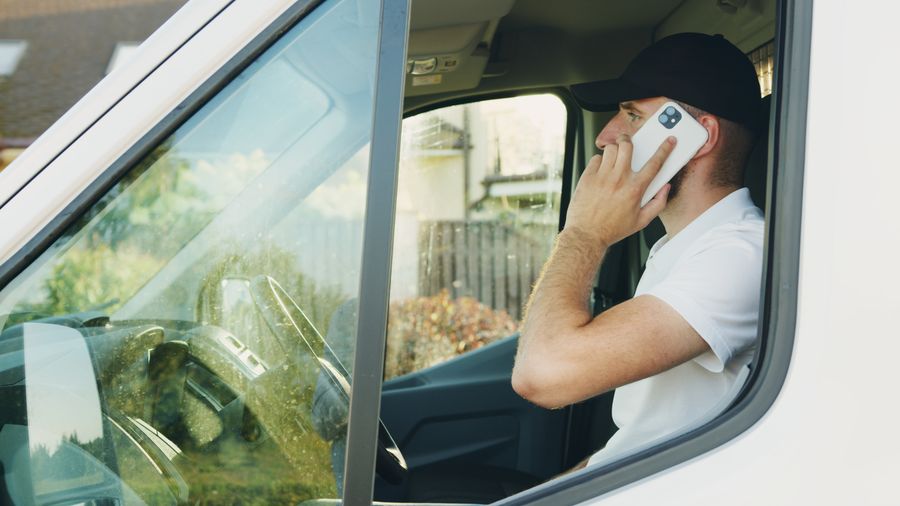
Homeowners search "roof repair cost," "how long does roof replacement take," and "what to expect during roof repair." Those terms have high volume and high residential competition.
Property managers and facility directors search "flat roof maintenance schedule," "TPO vs EPDM commercial roof," "how to evaluate commercial roofing bids," "ponding water on flat roof causes," and "commercial roof inspection checklist." Those terms have lower volume. They also have zero residential searchers in the mix - every person who searches "TPO vs EPDM commercial roof" is a commercial buyer. A single page ranking for that term reaches exactly the audience you want, with no noise from homeowners who will never call you.
GBP is the main event for home service businesses, but for commercial contractors, the website's content library carries more weight than in residential work. A property manager researching vendors will read three or four pages of your website before calling. That means your commercial roofing services page, your flat roof systems page, and one or two supporting posts on commercial-specific topics need to exist and to actually answer the questions being asked.
Before-and-after photos and project case studies are especially effective for commercial SEO because they do two things: they give Google visual evidence that your work is real and specific to the commercial category, and they give property managers the proof-of-scale they need before inviting you to bid. A residential roofer's photo gallery shows shingles. A commercial roofer's photo gallery should show flat roof systems, commercial buildings, warehouse rooftops, and multi-unit properties - the visual signals that say "this contractor works on buildings like mine." (We are an SEO agency writing this, so you are right to weight it slightly. But we have seen the traffic data on commercial service pages with and without project case studies, and the difference is not subtle.)
For the content structure, a full roofing SEO framework covers the topic cluster approach in more detail.
6. When commercial roofing SEO is not your first move
If your commercial business runs entirely on referrals from a handful of general contractors and property management companies you have worked with for years, local SEO is probably not the highest-leverage use of your next three months.
The honest answer is that commercial roofing has two types of clients: those who search Google when they need a contractor, and those who call the same person they have worked with for the last eight years. If your market is entirely the second type - and some commercial roofing markets are - the effort required to rank for commercial keywords may not match the actual volume of search-intent buyers in your city.
Before committing to a commercial SEO campaign, run a search for the commercial roofing terms you want to rank for in your city. If the Local Pack shows three profiles and none has a review in six months, you are in an early market where basic GBP optimization and a trade directory cleanup will be enough. If you see three fully-optimized profiles with consistent recent reviews and active posting histories, you are competing for a real prize and the work is proportionally heavier.
Local Services Ads (LSA) are worth running alongside commercial roofing SEO because they are cost-per-lead rather than cost-per-click, and the verification badge they carry signals immediate credibility to a property manager comparing options. For commercial roofing, starting LSA from day one while building organic authority in parallel typically produces the lowest blended cost per qualified lead over 12-18 months. The Google Guaranteed badge guide covers the enrollment process and what the verification check actually involves.
Frequently asked questions
Is commercial roofing SEO different from residential roofing SEO?
Yes - the keywords, the buyer intent, and the decision timeline are all different. Commercial buyers are typically property managers or facility directors who research vendors carefully before requesting bids. They search for system-specific terms (TPO, EPDM, flat roof) rather than generic "roof repair near me" queries. A content and GBP strategy built for residential clients will underperform for commercial searches. The six tips above outline the main differences and what to do about them.
How many Google reviews does a commercial roofing company need to rank?
There is no magic number. What matters more than count is recency. A profile with 40 reviews and 4 new ones this month will consistently outrank a competitor with 300 reviews and none in six months. For commercial contractors where jobs are infrequent but high-value, the goal is to build a steady trickle - one or two reviews per month from completed projects - rather than hitting a total count target and stopping.
Do property managers actually search Google for commercial roofing contractors?
Yes, particularly for emergency situations (an active leak or storm damage) and when their regular contractor is unavailable or has retired. They also use Google when evaluating multiple contractors for a planned re-roofing project - appearing in the Local Pack gives you a seat at the table before the RFP goes out. The search volume for commercial roofing terms is lower than residential, but the job value behind each searcher is dramatically higher.
Which directories matter most for commercial roofing NAP consistency?
Beyond the standard local directories (Yelp, BBB, Angi), commercial roofing contractors should prioritize their NRCA membership listing, their regional roofing association directory, and any trade-specific databases relevant to their work (Dodge, Thomasnet for commercial construction). These carry credibility signals that general directories do not, and they are the sources a property manager doing due diligence on a vendor is more likely to check.
How long does commercial roofing SEO take to produce results?
Most clients see measurable GBP movement within 60-90 days in low-to-mid competition markets after a proper category audit, service area tightening, and citation cleanup. Local Pack ranking for competitive commercial terms in major metros typically takes 90-180 days of consistent work. The organic cost per call from that ranking, after 12-18 months, is typically 70-90% lower than paid per-call cost from LSA - so the timeline investment compounds in your favor.
Should I run Google Ads for commercial roofing while doing SEO?
Local Services Ads (LSA) are worth running in parallel with commercial roofing SEO. They are cost-per-lead not cost-per-click, they carry a verification badge that builds immediate trust, and they appear above the standard organic results. Standard Google Search Ads are harder to justify for commercial roofing because the search volume is lower and the cost-per-click in competitive commercial markets can make the math difficult. LSA alongside SEO is the combination that produces the lowest blended cost per qualified lead over time.
Not sure where your commercial roofing profile stands?
A free audit shows exactly how your GBP is set up, where your citations are inconsistent, and what your closest competitors are doing that you are not. No pitch on the other end - just the data.
Looking for hands-on help? See our Roofing SEO Company service.
Want help implementing this for your business?
We audit and optimize local SEO for home service contractors. Get a free analysis of your market, no commitment, no hard sell.
Contractor Help Desk
What would help your business most right now?
Describe what you are stuck on, rankings, reviews, ads, leads, anything. Get an answer instantly.